LED Face Mask Not Working? 7 Common Mistakes to Avoid
If your LED face mask isn't delivering what you expected, the reason usually lies in how it's used. Here are the 7 most common mistakes and the right routine, step by step.

Updated: November 2026 · Marek Švajka · 7 min read
If it feels like your LED face mask isn't working, the cause almost always lies in how it's used: irregular sessions, make-up or sunscreen on the skin, extended sessions or expecting changes too quickly. LED light works gradually, so consistency, clean skin and patient tracking make the difference.
At a glance
- Rhythm is the foundation: 10 minutes, 3–5 times a week, over the long term.
- Light needs clean, dry skin without make-up or SPF.
- Longer or more frequent sessions don't mean a better effect.
- Changes come gradually and differ from person to person – photos help you see them.
- Retinol and acids belong at a different time of day than LED light.
Why isn't my LED face mask working?
Most often because the LED mask is used differently from what light-based skincare needs. The principle, known as photobiomodulation, relies on skin cells receiving regular, moderate doses of light at specific wavelengths. A single session every now and then is therefore more of a pleasant break than a visible change.
The good news is that most mistakes take only a few minutes to fix. Adjust the order of steps in your routine, set fixed days and give your skin time. The LumenLuxe LED mask is designed to fit easily into an ordinary day – 10 minutes, cordless and with automatic shut-off.
What are the 7 most common LED mask mistakes?
They are small details in the routine that add up – here is an overview, with the details right below.
| Mistake | Why it holds you back | What to do instead |
|---|---|---|
| 1. Irregular use | Light works cumulatively | ✓ Fixed days, 3–5 times a week |
| 2. Make-up and SPF on the skin | A layer on the skin reflects and scatters light | ✓ Remove make-up, cleanse, pat dry |
| 3. “The longer, the better” | Skin responds to dose in a biphasic way | ✓ 10 minutes is enough |
| 4. Putting it on in a hurry | LEDs don't face the skin evenly | ✓ Adjust the strap as instructed |
| 5. A mode without a goal | Each colour has a different focus | ✓ Choose the mode for your skin's needs |
| 6. No tracking | Gradual changes are hard to see in the mirror | ✓ Photos in the same light |
| 7. Forgetting the basics | LED complements a routine, it doesn't replace it | ✓ Hydration and SPF during the day |
1. Using the mask irregularly
Irregular use is the most common reason people don't see changes. The effect of light builds up over many consecutive sessions, so it helps to link the mask to something you do anyway – an evening series or reading, for example. The recommended rhythm is 10 minutes, 3–5 times a week. Put specific days in your calendar and stick to them.
2. Wearing the mask over make-up or sunscreen
Light reaches the skin best when it is clean and dry. Make-up, mineral SPF filters or a thick layer of cream partly reflect and scatter the light. Before a session, remove your make-up, wash your face with a gentle cleanser and pat it dry. You'll find the full routine in the article How to prepare your skin before using an LED mask.
3. Thinking longer means better
Twice the time or two sessions a day won't bring twice the effect. Photobiomodulation research describes a so-called biphasic dose response: an appropriate dose of light supports cells, while a much higher dose can weaken the beneficial effect (Huang et al., Dose-Response 2009, PMID 20011653). The studies cited tested other devices and wavelengths; their results are not results of the LumenLuxe mask.
That's why the LumenLuxe LED mask has a set 10-minute session and automatic shut-off – you don't need to keep track of time. If your skin is on the sensitive side, start with one of the lower of the 5 intensity levels and increase gradually.
4. Putting the mask on in a hurry
The mask should sit comfortably and evenly so the LEDs face the whole face. Before switching it on, adjust the strap so the mask doesn't slip, and rest during the session – ideally reclining or lying down. Keep your eyes closed and use the protective eye shields included in the box.
5. Choosing a mode without a clear goal
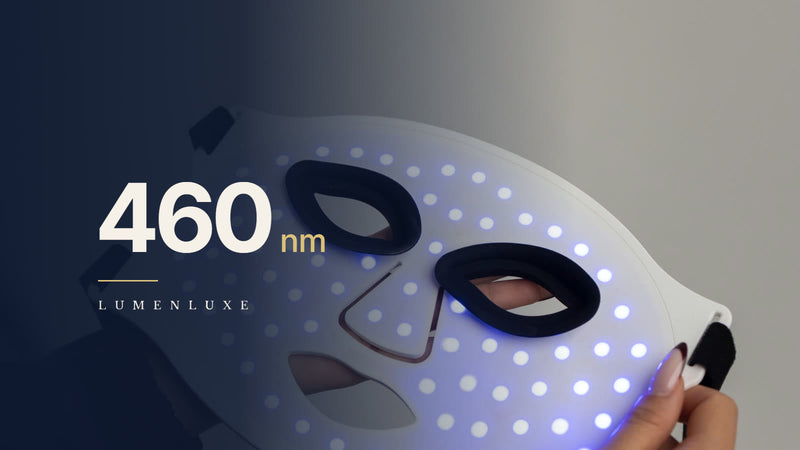
Each of the 7 colours has a different focus, so it pays to choose the mode based on what you want to support. Red light (630 nm) is the most common choice for the overall look and elasticity of the skin, blue (460 nm) is used for oilier skin, and combined modes bring several wavelengths together. If you switch colours every day without a plan, it's hard to tell what suits your skin. You'll find an overview in the article LED mask colours: which of the 7 modes to use when.
6. Not tracking changes
Gradual changes are almost invisible in the mirror because you see yourself every day. Photos help: same spot, same daylight, same angle and time of day, no make-up. Every two weeks, compare a photo with the first one and jot a short note in a diary – which mode, how many sessions, how your skin feels. The pace of change is individual and depends on skin type, age and lifestyle.
7. Forgetting basic skincare
An LED mask complements a routine rather than replacing it. Hydration, gentle cleansing, sunscreen during the day and enough sleep form the foundation that light-based care builds on. Use light-sensitive skincare such as retinol or acids at a different time of day than the LED mask – for example, the mask in the morning and retinol in the evening.
What does the right LED mask routine look like?
A proper session has five simple steps and takes about a quarter of an hour, including preparation.
- Remove make-up and cleanse – take off make-up and SPF, gently wash your face and pat it dry.
- Put the mask on – comfortable fit, strap adjusted, eyes closed and protected by the shields.
- Choose mode and intensity – based on your goal; start with a lower intensity.
- 10 minutes of rest – the mask switches off by itself when the session ends.
- Hydrate – apply a serum or cream as part of your routine.
Who should not use an LED mask?
The same standard guidelines apply to all LED masks – before you start, check whether any of these situations applies to you:
- pregnancy,
- light-sensitive epilepsy,
- an active skin condition or infection in the treatment area,
- retinal disorders,
- taking photosensitising medication (e.g. isotretinoin, some antibiotics),
- light-sensitive skincare (retinol, acids) – use it at a different time of day than the LED mask.
Before first use, do a patch test on the skin of your hand. Mild redness usually fades within 1–2 hours; if you feel a burning sensation, stop the session immediately. More in the article LED mask contraindications.
How do usage mistakes differ from LED mask myths?
Mistakes are about how you use the mask; myths are about what people believe about LED light. This article covers the practical routine – if you'd like to know whether an LED mask emits UV radiation or whether “stronger is always better”, read LED mask myths: 8 misconceptions people believe.
LumenLuxe LED mask at a glance
CE · RoHS7 modes
A regular routine works best when every session is simple and always the same. The LumenLuxe LED mask keeps track of time for you and can be used anywhere at home.
| LEDs | 210 |
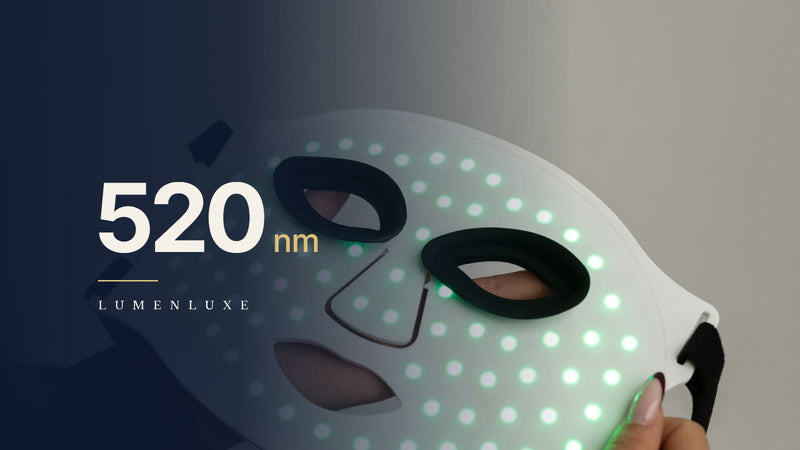
| Modes | 7 – red 630 nm, blue 460 nm, green 520 nm, purple 630+460 nm, yellow 630+520 nm, cyan 520+460 nm, white 630+520+460 nm |
| Output | 20 mW/cm² (≈ 12 J/cm² in 10 min at maximum intensity), 5 intensity levels |
| Session | 10 minutes, 3–5 times a week |
| Certification | CE, RoHS |
| Returns / warranty | 60-day returns, 24-month warranty |
| Price | €199.97 |
BENEFITS
- ✓ 10-minute session with automatic shut-off – no accidental overtime
- ✓ Stated output of 20 mW/cm² and 5 intensity levels for a gradual start
- ✓ 7 modes for different skin needs
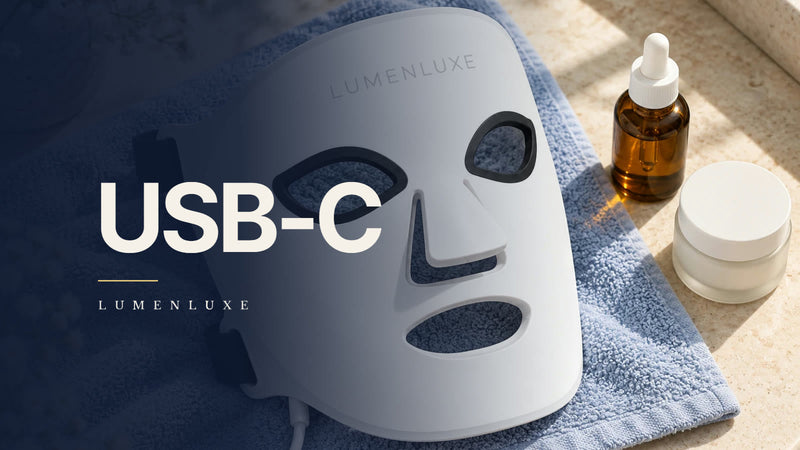
- ✓ Cordless, USB-C charging (1,200 mAh, about 10 sessions per charge)
- ✓ Protective eye shields and storage bag included
- ✓ 24-month warranty and 60-day returns
Frequently asked questions
How long does it take to see changes in my skin?
The pace is individual and depends on skin type, age, lifestyle and consistency. LED light works gradually, so photograph your skin regularly in the same light and compare photos over a longer period.
Can I use an LED mask every day?
The recommended rhythm is 10 minutes, 3–5 times a week. More sessions or longer ones don't mean a better effect, because skin responds to the light dose in a biphasic way.
Do I need to remove make-up before using an LED mask?
Yes. Make-up, sunscreen and a thick layer of cream partly reflect the light, so always use the mask on clean, dry skin.
What should I apply after a session?
After a session you can apply a hydrating serum or cream as part of your routine. Use retinol and acids at a different time of day than the LED mask.
Should I keep my eyes closed during a session?
Yes, keep your eyes closed and use the protective eye shields included in the box. This is a standard guideline for all LED masks.
An LED mask brings out its best when it becomes a natural part of your week: clean skin, 10 minutes of rest and patience. If you're looking for a mask that makes the routine easier, take a look at the LumenLuxe LED mask with 7 modes and automatic shut-off.
Discover the LumenLuxe LED maskHow to prepare your skin
Related: How to start with an LED face mask: your first 4 weeks · How to Clean and Charge an LED Face Mask: Care Guide