Winter Skincare: Where an LED Face Mask Fits
How to care for dry, tight skin in winter and where an LED face mask fits in your routine: order of steps, hydration, SPF and contraindications.

In winter, skin benefits from gentle cleansing, a richer moisturiser, protection from the cold and SPF during the day. An LED face mask can be an add-on to your routine: it goes on clean, dry skin before moisturiser, but it does not replace basic skincare and is not suitable for irritated or damaged skin.
How do you care for your skin in winter?
The basis is gentleness: mild cleansing, enough hydration and protecting the skin barrier from frost, wind and dry indoor heating air. A winter routine should be simpler rather than overloaded with active products.
In the cold season, skin faces frequent temperature swings. Outdoors, frost and wind dry it out; indoors, it is the dry air from heating. That is why many people notice dry, tight skin that flakes or reacts more to cosmetics it tolerated in summer.
What to adjust in a winter routine
- Cleansing: choose a gentle, non-stripping product and water that is not too hot.
- Hydration: a richer cream or serum with hydrating ingredients, applied to still slightly damp skin.
- Protection: a cream that protects skin from the cold before going outside, and SPF in winter too.
- Peeling and acids: use with care and less often if your skin feels tight.
- Environment: enough fluids and higher humidity in the room contribute to skin comfort.
Why does skin react differently in winter?
In winter, skin is exposed to cold and dry air, so it loses more moisture and its protective barrier is more vulnerable. Many people therefore prefer a richer cream texture and fewer harsh products than they use in summer.
Changing your routine does not have to be dramatic. Swap a light gel for a more nourishing cream, shorten hot showers and avoid hot water on your face. If skin still feels tight, simplify your routine and leave out anything that stings or burns. For persistent problems, talk to a dermatologist.
Is SPF really necessary in winter?
Yes, UV radiation reaches the skin in winter too, especially around snow and in the mountains, where it reflects off white surfaces. SPF belongs in your daily routine regardless of the season and regardless of the LED mask. Apply it as the last step of your morning routine.
Does an LED face mask fit into a winter routine?
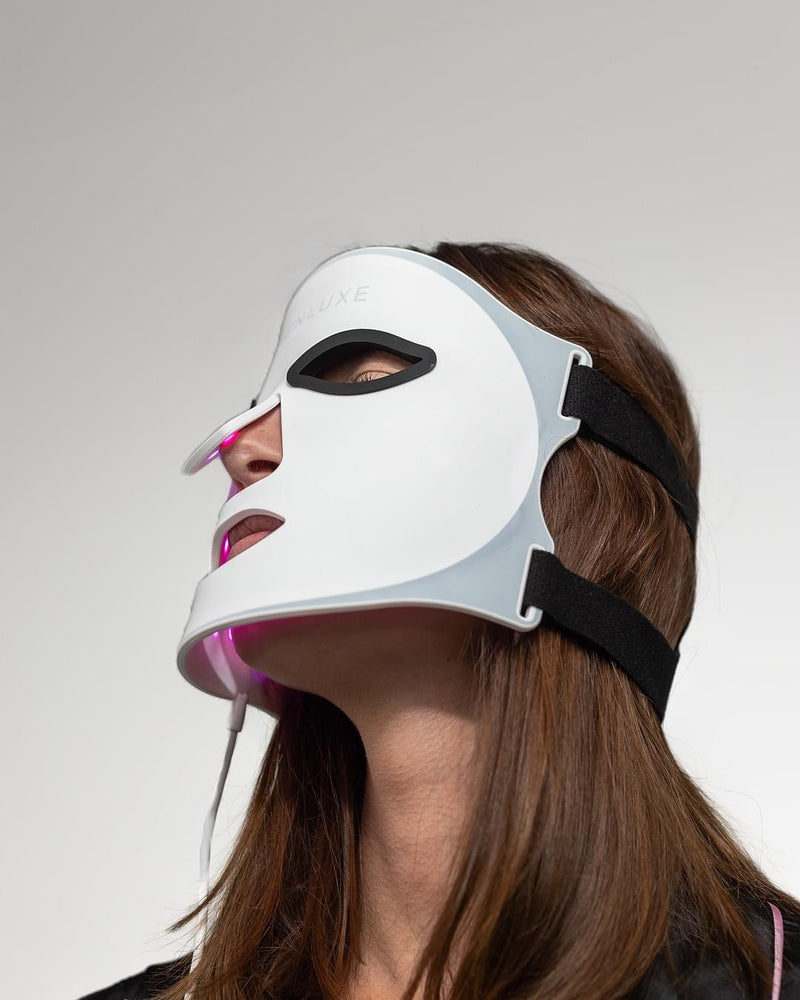
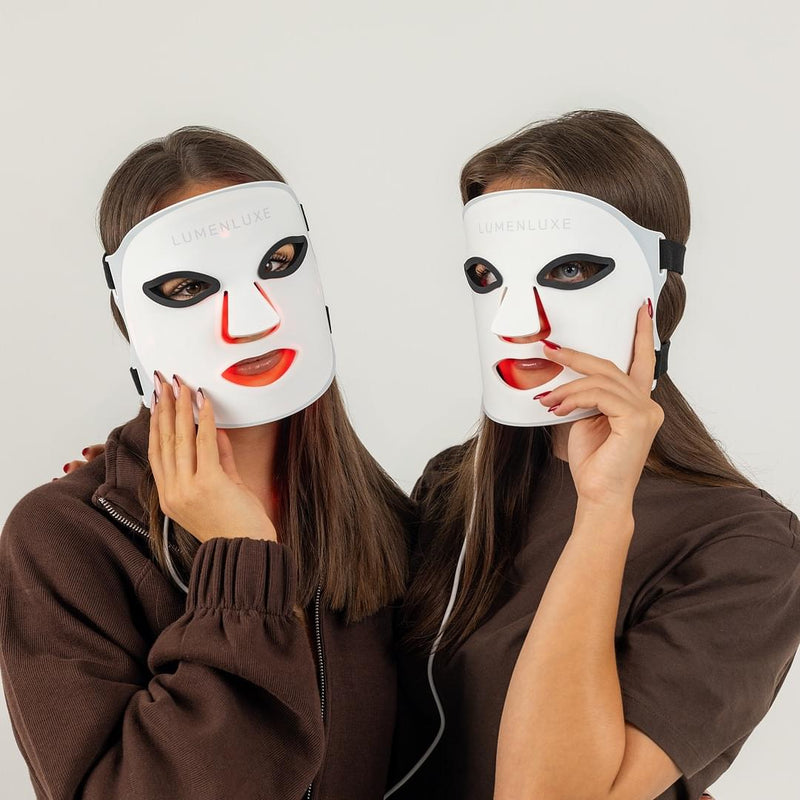
An LED face mask fits into a winter routine as an add-on if your skin is not irritated and you follow the order of steps. It is not a substitute for hydration or protective cream and does not “solve” dryness caused by the weather. It can, however, support the appearance of skin as part of regular skincare.
With dry, tight skin, proceed carefully: start with a lower intensity, moisturise well after the session and stop if you feel any burning or notable irritation. If skin is visibly irritated, cracked or painful, wait with the mask until it calms down.
For more on handling more sensitive skin, read the article LED mask and sensitive skin.
What is the right order of steps in a winter routine with an LED mask?
The right order is: gentle cleansing, thorough drying, LED mask for 10 minutes, then moisturiser and, during the day, SPF. The mask goes on clean, dry skin without make-up and without photosensitising products.
| Step | Morning | Evening |
|---|---|---|
| 1. Cleansing | Wash face gently | Remove make-up and cleanse gently |
| 2. Drying | Dry thoroughly | Dry thoroughly |
| 3. LED mask | 10 minutes, with eye shields | 10 minutes, with eye shields |
| 4. Hydration | Moisturiser or serum | Richer nourishing cream |
| 5. Protection | SPF and a cream against the cold | – |
Retinol, acids and other light-sensitive cosmetics belong at a different time of day than the mask. With dry, tight skin, also consider how often you use them in winter. Read more in the article on combining with retinol.
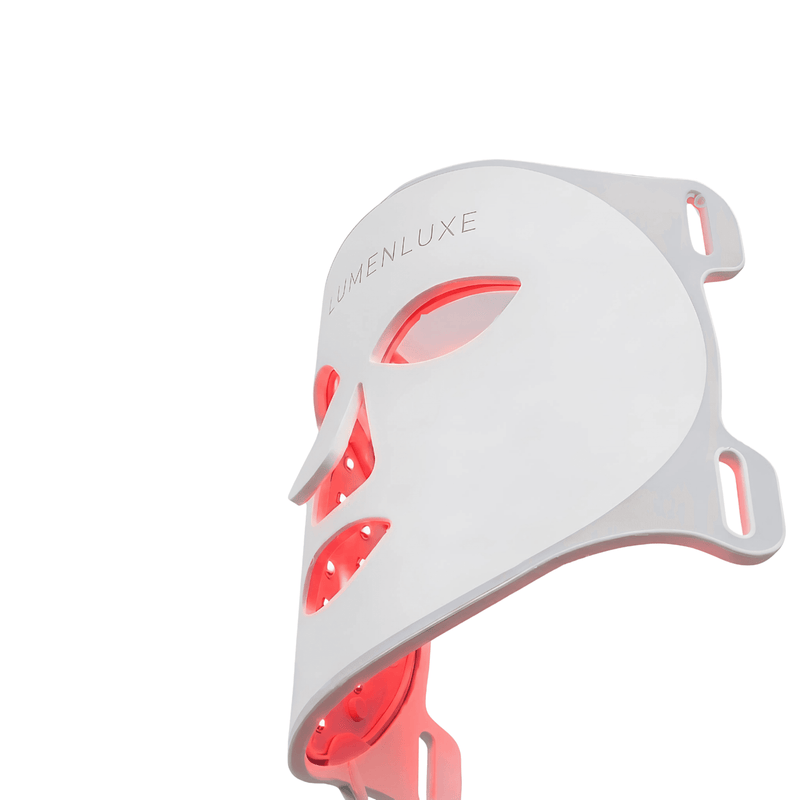
LumenLuxe LED Face Mask at a glance
Key parameters of the LumenLuxe LED face mask. The LumenLuxe LED face mask is a cosmetic device, not a medical device.
| Parameter | Value |
|---|---|
| Number of LEDs | 210 |
| Light modes | 7: red 630 nm, blue 460 nm, green 520 nm, purple 630+460 nm, yellow 630+520 nm, cyan 520+460 nm, white 630+520+460 nm |
| Power | 20 mW/cm² (≈ 12 J/cm² per 10 min at maximum intensity, 5 intensity levels) |
| Session | 10 minutes, 3–5× per week |
| Certifications | CE and RoHS |
| Returns | 60 days |
| Warranty | 24 months |
| Power supply | USB-C, 1,200 mAh battery, 4–5 h charging, about 10 sessions per charge |
| In the box | eye shields, storage bag |
| Current price | €199.97 |
The LumenLuxe LED face mask has no infrared (NIR) light. LED lifespan is 50,000+ hours and the mask switches off automatically when the session ends.
Which mode to choose in winter?
The manufacturer does not define a “winter” mode, and our sources contain no study comparing winter use. The choice of mode therefore depends on your preferences and on how your skin tolerates the session. You can find an overview of all seven modes in the article LED mask colours: which of the 7 modes to use when.
With more sensitive or dry skin, it is worth starting with a lower intensity and watching how your skin reacts. Blue light (460 nm) near the eyes calls for caution, so always keep your eyes closed and use the protective shields from the box.
How often to use the mask in winter?
The recommended use is 10 minutes per session, 3–5× per week. Do not extend the session. If your skin feels tight or more sensitive in winter, start at the lower end (3× per week) and increase only if your skin tolerates the sessions well.
Before first use, do a patch test on the skin of your hand. Slight redness should fade within 1–2 hours; if you feel burning, stop immediately.
Practical tips for winter evenings
- Keep the mask in the same place so using it becomes a habit.
- Apply moisturiser right after the session, while the skin is clean.
- Note the date, mode, intensity and how your skin feels in a diary.
- Photograph your skin under the same conditions: same light, angle and time of day.
Who should not use the LED mask?
Do not use the LED mask in these situations:
- pregnancy,
- light-sensitive epilepsy,
- active skin disease or infection in the treated area,
- retinal disease,
- taking photosensitising medication (e.g. isotretinoin, certain antibiotics).
Light-sensitive cosmetics (retinol, acids) belong at a different time of day than the mask. If in doubt, ask a doctor. If your skin stays irritated after winter or you are unsure of the cause, see a dermatologist.
Frequently asked questions
Can I use the LED mask if I have dry skin?
If skin is neither irritated nor damaged, yes, but carefully. Start at a lower intensity, moisturise after the session and stop immediately if you feel burning.
Do I need SPF in winter even with an LED mask?
Yes, SPF belongs in your daily routine all year round. Apply it after the mask and after moisturiser.
Is it better to use the mask in the morning or evening?
The manufacturer does not set a fixed time of day. What matters is that skin is clean, dry and free of light-sensitive products, and that you can keep to the time you choose.
Can the mask replace a winter cream?
No. The LED mask is an add-on, not a replacement for hydration or protective cream. Always follow the session with moisturiser.
Can I use the mask after a peel or with acids?
Use acids and light-sensitive cosmetics at a different time of day than the mask. After a peel, let your skin calm down first, and do not use the mask if it is irritated.
Conclusion: in winter, less is more
Winter skincare rests on gentle cleansing, hydration and SPF; the LED mask is an optional add-on that goes on clean skin before moisturiser. Read more about more sensitive skin in the article LED mask and sensitive skin and about the individual modes in LED mask colours.
Would you like to try the LumenLuxe LED face mask in your winter routine? Discover the LumenLuxe LED face mask – you have 60 days to return it and a 24-month warranty.