Does an LED Face Mask Work? What Studies Show and Don't Show
Clinical studies showed improvements in wrinkles and collagen density with LED phototherapy, but they also have limits like small samples or missing control groups. An overview of what research confirms and what it doesn't.

Short answer: several clinical studies using both at-home and professional LED devices showed improvement in wrinkle depth, collagen density, and skin texture with regular use. Results vary by wavelength, dose, and study methodology, and not every study tracked the same parameters. Below is a summary of what studies have shown – and what they haven't.
Does an LED face mask actually work?
According to available clinical studies, yes – for some skin parameters, such as wrinkles, collagen density, or the depth of fine lines, participants repeatedly showed measurable improvement. This wasn't a single isolated study, but several independent studies using different wavelengths and devices. It's important to distinguish what exactly was measured and with which device – the results of a specific study aren't automatically the results of the LumenLuxe mask.
The cited studies tested other devices and wavelengths; their results are not the results of the LumenLuxe mask. LumenLuxe doesn't have its own clinical study – it's a cosmetic device, not a medical device, and the figures below always come from a specific scientific publication.
What exactly did studies measure and show?
Across studies, three things were most commonly tracked: the depth and visibility of wrinkles, collagen density in the skin, and overall roughness or skin surface texture. Measurements were taken using profilometry, ultrasound, or blinded photo assessment by independent raters – not just participants' subjective impressions.
- In a lab skin model and the clinical split-face part of a study using red light at 660 nm (12 treatments), 87% of participants had a lower wrinkle severity score under blinded assessment, and over 90% had reduced wrinkle depth and roughness by profilometry.
- A randomized study with 136 volunteers and 30 sessions (611–650 nm and 570–850 nm) showed higher collagen density measured by ultrasound, along with improvements in profilometry and blinded photo assessment.
- A home mask with red light at 630 nm in 20 women (12 minutes, 2×/week, 3 months) showed improvements in wrinkle depth, skin firmness, dermal density, and pores – however, this study had no control group, and its authors were employees of the mask's manufacturer.
- A home mask with 633/830/1072 nm in 7 men (3–5×/week, 6 weeks) confirmed significant improvement in wrinkles and brown spots, but improvement in pores or UV spots wasn't confirmed in this study.
- Two studies focused on wrinkles around the eyes (one with 137 women aged 40–65 comparing 660 nm and 590 nm, the other double-blind, sham-controlled, with 60 adults and a home mask at 630+850 nm) showed improved wrinkle volume after several weeks of use.
Why aren't results the same across different studies?
The first reason is device variability. Professional phototherapy devices used in dermatology clinics have different power and treatment times than home masks, and even among home masks wavelength, power, and recommended frequency of use differ. For example, a study with 137 women directly compared two wavelengths on the same face (a split-face design) – 660 nm on one half and 590 nm on the other – and both produced measurable, though slightly different, improvement in wrinkle volume around the eyes. This shows that even within a single study, the result changes depending on the wavelength used.
The second reason is the length and frequency of follow-up. The home-mask study in 7 men lasted 6 weeks with treatments 3–5×/week, while the double-blind, sham-controlled study with 60 adults followed participants for up to 16 weeks with ongoing evaluation at weeks 8, 12, and 16. Longer follow-up can capture gradual changes that a shorter period might miss, so a one-off comparison of numbers from studies of very different lengths isn't meaningful without this context.
What haven't studies shown or confirmed?
Not every tracked parameter turned out positive, and not every study had a methodology that would allow claiming more than it actually showed. Several limitations recur across phototherapy research and are worth keeping in mind when reading any marketing claims about LED masks.
| Study limitation | What it means for interpreting results |
|---|---|
| Small sample size (e.g. 7 or 20 people) | The result may not generalize to a wider population |
| Missing control group | It's unclear how much of the improvement was caused by the light itself versus other factors (skincare, time) |
| Different wavelengths or combinations than LumenLuxe | The figure from the study can't be directly attributed to our mask |
| Authors affiliated with the tested device's manufacturer | Risk of bias in favor of the product |
| Some parameters (e.g. pores, UV spots) showed no significant change | Phototherapy doesn't affect every sign of skin aging equally |
That's exactly why it's worth checking whether a study had a control group, how many people took part, and who funded it – these three questions quickly reveal how much weight a given claim carries. The difference between professional and at-home treatment is covered in more detail in the article Home LED Therapy vs. Salon: What the Studies Say.
The same questions are worth asking about any marketing claim regarding LED devices, not just LumenLuxe. If a manufacturer states a specific percentage of improvement but doesn't say which study the number comes from, which device, or which wavelength was tested, there's no way to verify whether the claim applies to that specific product or just to the general principle of phototherapy.
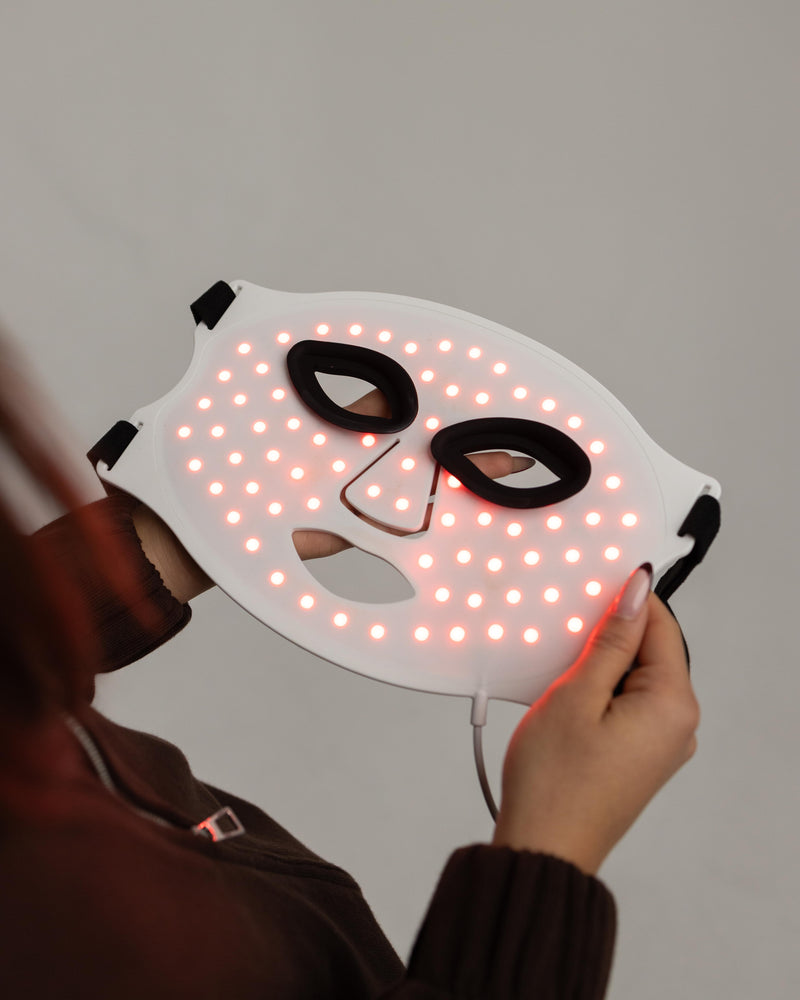
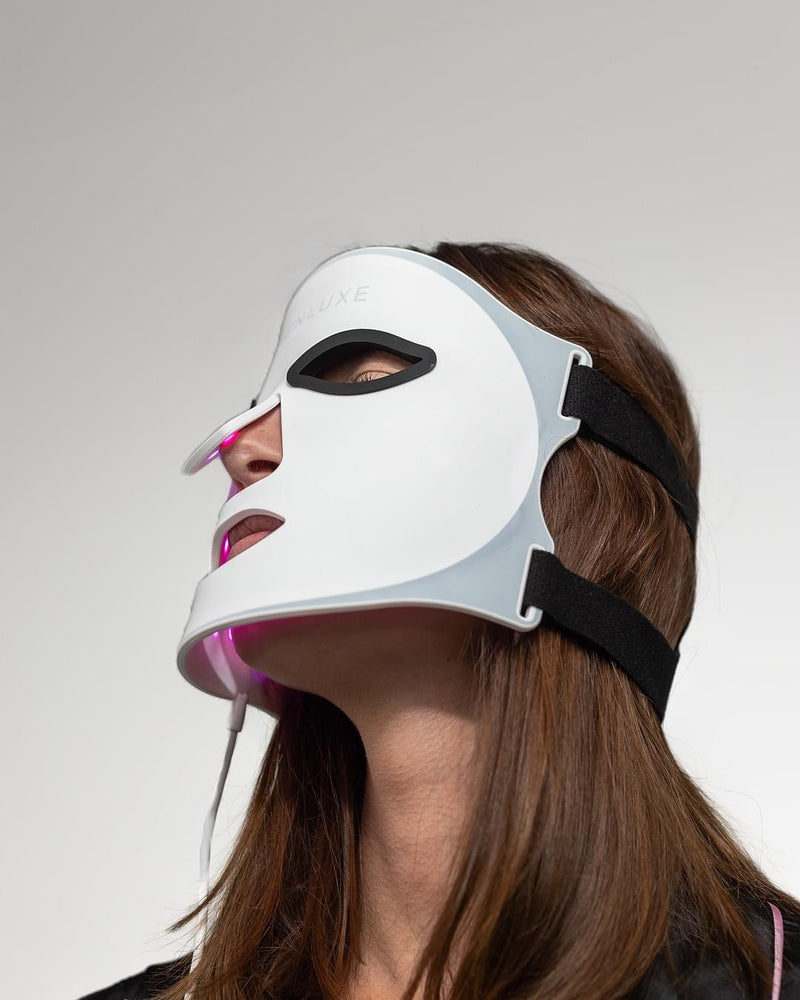
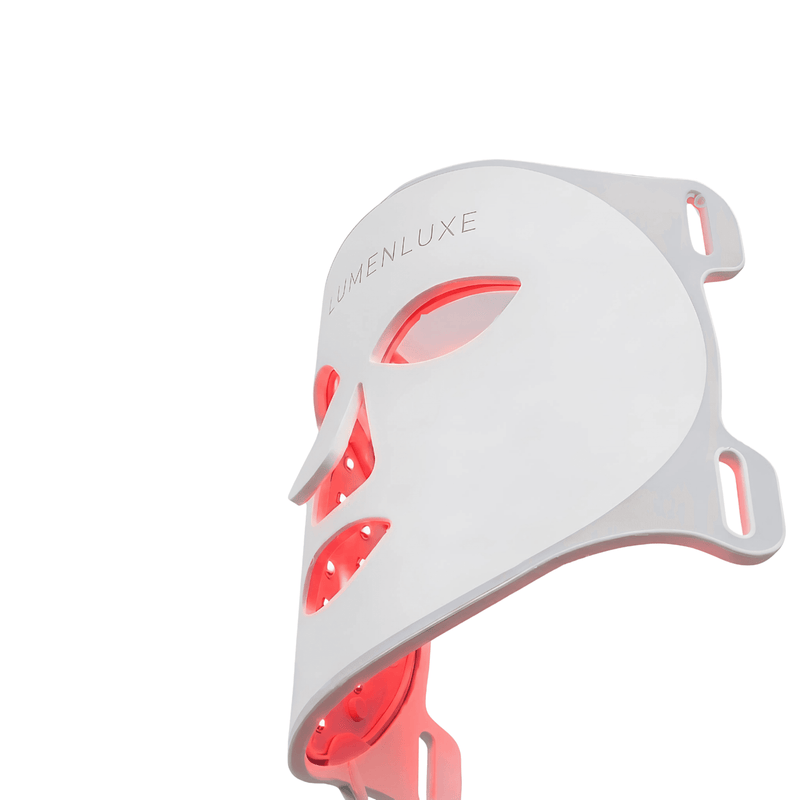
LumenLuxe LED mask at a glance
| Parameter | Value |
|---|---|
| Number of LEDs | 210 |
| Light modes | 7 (red 630 nm, blue 460 nm, green 520 nm, purple 630+460 nm, yellow 630+520 nm, cyan 520+460 nm, white 630+520+460 nm) |
| Power | 20 mW/cm² (5 intensity levels, ≈ 12 J/cm² over 10 min at maximum intensity) |
| Treatment length | 10 minutes, 3–5×/week |
| Certification | CE, RoHS |
| Returns | 60 days |
| Warranty | 24 months |
| Price | €199.97 |
The LumenLuxe LED mask has no infrared (NIR) light and no clinical study of its own – the parameters above are verifiable technical product specs, not research findings.
What are the contraindications for using an LED mask?
The LED mask shouldn't be used by pregnant women, people with light-sensitive epilepsy, an active skin condition or infection at the treatment site, retinal conditions, or those taking photosensitizing medication (for example isotretinoin or certain antibiotics). If you use light-sensitive cosmetics such as retinol or acids, apply them at a different time of day than the LED treatment.
Before first use, we recommend a patch test on the skin of your hand. Mild redness may subside within 1–2 hours, but if you feel any burning, stop the treatment immediately. If you'd like to know exactly how the LED mask works and how to fit it into your routine, read the article LED face mask: how it works, what it helps with, and how to choose the right one.
Frequently asked questions
Do studies show improvement right after the first use?
No. In most of the cited studies, improvements appeared only after several weeks of regular use (typically 6–16 weeks), not after a single treatment.
Did any study test the LumenLuxe mask directly?
No, LumenLuxe doesn't have its own clinical study. The cited papers tested other devices and wavelengths, so their results only serve as general scientific context for phototherapy.
Why didn't some studies have a control group?
For practical and cost reasons, smaller or pilot studies sometimes compare before-and-after treatment without a separate control group, which limits how strongly they can support causal conclusions.
Does LED light help equally with every sign of skin aging?
No. While wrinkles and collagen density improved repeatedly across several studies, other parameters, such as pore size or UV spots, showed no significant change in some papers.
Is it safe to use an LED mask if I have sensitive skin?
Generally yes, provided the contraindications are respected, but we always recommend a patch test first and watching how your skin reacts. See our separate article on sensitive skin for more.
What can I do to get results similar to those in the studies?
Consistency matters most – most cited studies used treatment several times a week over multiple weeks, not occasionally.
If you're considering an LED mask, check out the current offer for the LumenLuxe LED face mask – with a 60-day return window and a 24-month warranty, you can try the product and see whether it suits you, without unnecessary financial risk.